Sometimes installation of a lift in an already existing building can become challenging due to lack of room for the lift pit. The process of excavating may impact the foundations of the building or even raise costs of construction and renovation works. In such cases, a pitless lift can be the right solution.
A pitless lift is designed to minimize or eliminate the need for a deep pit below the ground-floor level. It provides convenient vertical transportation while reducing certain structural and civil construction requirements. In this blog, we will explore what a pitless lift is, how it works, its benefits and where it can be installed.
What Is a Pitless Lift?
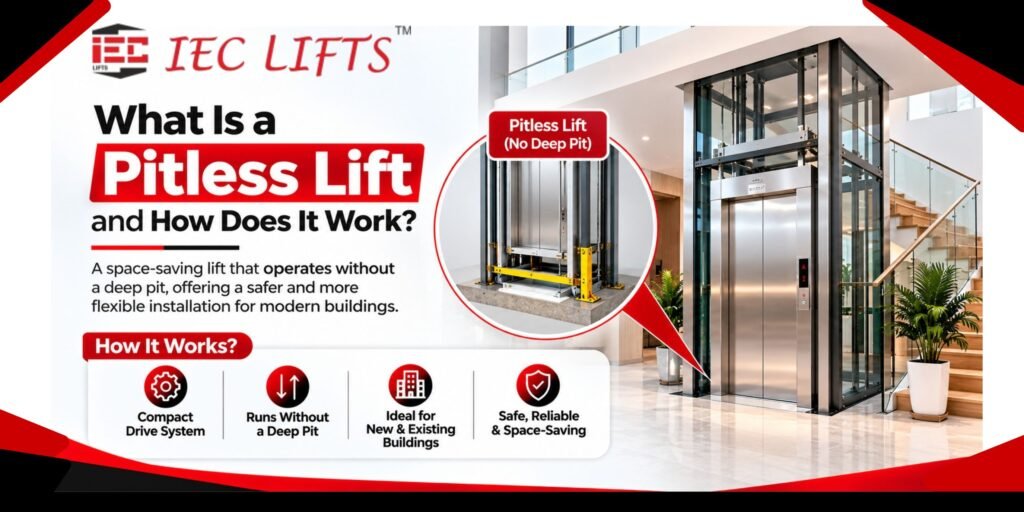
A pitless lift is a type of elevator that does not have to be installed in a deep lift pit. The standard lifts are often required to have a pit beneath the lowest landing for certain purposes. Pitless lift designs offer different layouts that minimize the need for such a pit.
The pitless lift is suitable for old constructions and hard to excavate areas. Different models might need a small pit or a specially treated foundation.
How Does a Pitless Lift Work?
A pitless lift operates using the same basic principle as a conventional elevator. It moves a cabin vertically between floors through a controlled drive mechanism.
Here is how the system works:
Lift Cabin and Guide Rails: The cabin moves vertically along guide rails installed within the designated space. These rails maintain proper alignment and ensure smooth movement.
Drive Mechanism: Depending on the design, the lift may use a traction or hydraulic mechanism to move the cabin between floors.
Control System: Passengers select their desired floor using the control panel. The system processes the command and controls the lift’s movement and stopping position.
Safety Mechanisms: Door interlocks, emergency controls, overload protection, and other safety features help ensure reliable operation according to the lift’s design and applicable regulations.
The main difference is that the system is engineered to reduce the conventional pit requirement while maintaining the necessary safety clearances.
Key Benefits of Installing a Pitless Lift
A pitless lift offers several advantages for buildings with limited structural space.
Less Excavation Work: One of the biggest advantages is reduced excavation. This can be helpful when digging a deep pit is difficult or may affect existing foundations.
Suitable for Existing Buildings: Older properties may not have the structural provisions required for traditional lifts. A suitable pitless lift can offer an alternative for such installations.
Better Space Utilisation: These lifts are designed to work with reduced pit requirements, helping make better use of the available building space.
Flexible Installation: Depending on the model and site conditions, pitless lifts can be considered for residential and selected commercial applications.
Reduced Construction Disruption: Less excavation can simplify certain installation activities and reduce disruption during building renovation or modernisation.
Where Can Pitless Lifts Be Installed?
Pitless lifts can be considered for different types of properties where conventional lift installation is challenging.
Residential Buildings: Homes, villas, and duplex properties requiring convenient floor-to-floor movement.
Commercial Buildings: Offices, showrooms, and business premises with limited structural provisions.
Existing Buildings: Properties undergoing renovation where major civil modifications are not preferred.
Low-Rise Buildings: Buildings requiring vertical transportation with reduced pit requirements.
However, the final suitability depends on the building structure, available space, travel height, and lift specifications.
Factors to Consider Before Installing a Pitless Lift
Before selecting a pitless lift, consider the available installation space, load capacity, number of floors, overhead clearance, and building structure. It is also important to check safety compliance, maintenance requirements, and the availability of technical support.
A professional site inspection helps determine whether the proposed lift model is suitable for your property.
Why Choose IEC LIFTS?
Selecting the right lift requires more than just comparing specifications. Understanding the building layout, installation limitations, and daily usage requirements is equally important.
IEC LIFTS offers lift solutions for different building requirements and applications. If your property has limited pit depth or you are exploring alternatives to conventional lift installation, consult IEC LIFTS to understand the available options and find a suitable solution.
Frequently Asked Questions (FAQs)
Q1. What is a pitless lift?
A pitless lift is an elevator designed to minimise or eliminate the need for a conventional deep pit below the lowest floor.
Q2. Does a pitless lift require excavation?
It generally requires less excavation than a traditional lift. However, certain models may need a small recess or specific base preparation.
Q3. Are pitless lifts suitable for existing buildings?
Yes, selected models can be installed in existing buildings where conventional pit construction is difficult, subject to a site assessment.
Q4. Are pitless lifts safe?
Yes, properly designed and installed pitless lifts include appropriate safety systems and must meet applicable safety requirements.
Q5. How do I choose the right pitless lift?
Consider the available space, load capacity, number of floors, building structure, and safety requirements. Professional guidance can help identify the right option.
Conclusion
The installation of pitless lifts is a good choice where traditional lift installation is difficult owing to lack of space for pit construction. The advantages of less excavation and flexibility of installation make this option viable in certain cases.
Contact IEC LIFTS to explore suitable lift solutions for your building.